(According to Lisa Jackson) Monson Center is considered by leading archeologists to be one of the most significant archeological sites in New England. Many of the original foundations of the homes that were built in this late 1700s village are preserved.
Visiting Monson Center, a historic gem, is literally a breath of fresh air, and a step back in time. This small portion of history is off the beaten path, but once you find it, you will never forget.
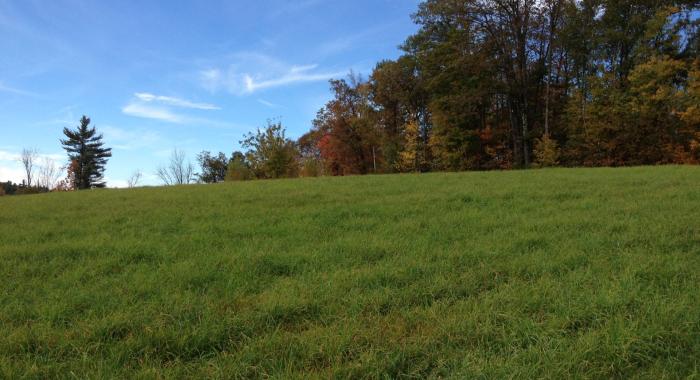
After parking in the small lot, you walk a few hundred yards down a forest lined dirt road. Each step carries you away from the busyness of every day life. There is no electricity or running water, but there is an energy to the place. A carved sign announces Monson Center, and after another few steps, the forest opens up. There are fields on either side as well as stone walls, wild flowers, and bird houses. Up ahead is the only habitable house on the property.
In the center of the field to your left is a large rock. I like to imagine the stories this boulder could tell, if it could, of the battles, struggles, and celebrations the town had during its short existence. Past that and all around the wall is part of what used to be Monson.
Monson was an early colonial settlement that existed from 1737-1770 and covered over 17,000 acres. It was part of Massachusetts at its inception. The center of town, main roads, and several foundation holes remain.
You can walk the rutted roads the settlers traveled, visit a few of the still-present cellar holes on the sites of some of the early settlers which include the Gould, Wallingford, W. Nevins, T. Nevins, Bayley, and Brown family homesteads. The only public structure the village had was the pound for runaway cattle. Monson never had a school house, meeting hall, or church.
Most historic sites are roped off and protected from visitors. Monson Center is open to visitors who want to take a step back in time and use their imaginations to wonder what it was like for the first settlers of this wild land. Only the doctor had a horse and buggy, everyone else travelled by foot. Imagine building a home without all the tools we have now in the time leading up to the American Revolution. These settlers did that and more.
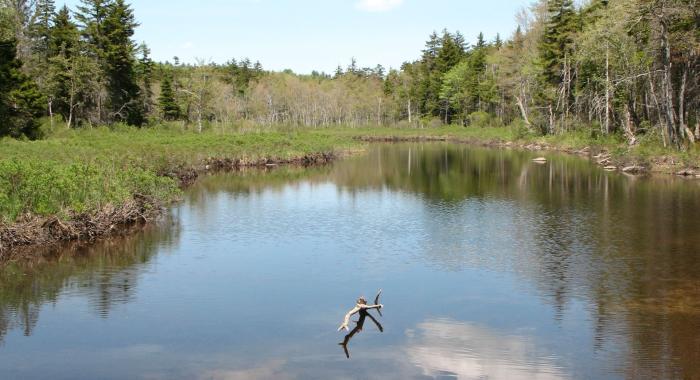
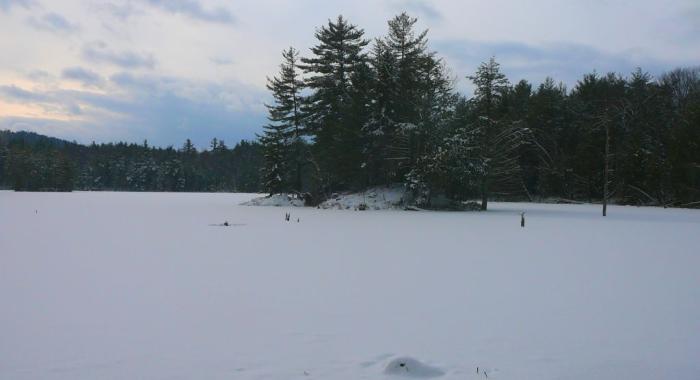
There is a lot of open space in the center of all the forest. The vastness of the natural untouched beauty is mesmerizing. At the north end of East Monson Rd and West Monson Rd. is a large beaver pond with several lodges. It is common to see blue herons here – nine nests were counted in 2010. Benches near the water in a few locations provide the hiker with lovely spots to sit while viewing wildlife.
What makes Monson so special is the caretaker. Russ Dickerman works on the property each day and enjoys retelling tales from long ago. He and his wife Geri restored the last standing colonial house on the property and it now serves as a small museum that is open when Russ is on the premises. Without Russ, and his passion for the property, it wouldn't be what it is - a precious historic gem that everyone should know about.
Interesting things to see along the trails include the cellar holes with labeled with historical information about the families, road signs, and the town pound, along with acres beautiful wildlife habitat and natural beauty.